
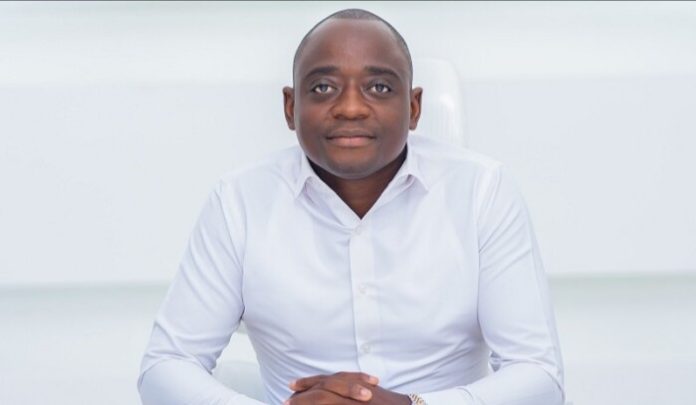


Uganda’s number one billionaire in 2026 sits at the apex of a private wealth structure that now exceeds 10.3 billion dollars among the country’s top fortunes. In a 65 billion dollar economy, that concentration is significant. Moreover, it reflects how capital accumulation in Uganda continues to outpace the development of public equity markets.
Unlike more mature economies where listed shares drive billionaire rankings, Uganda’s wealth hierarchy is largely asset-based. Commercial real estate, petroleum distribution, manufacturing and telecommunications-linked equity exposure form the backbone of private capital. As a result, the richest individuals in the country tend to control physical, income-producing assets rather than diversified stock portfolios.
Below is a structured look at Uganda’s number one billionaire and the other leading wealth holders shaping the country’s economic architecture in 2026. All figures are indicative asset-based estimates, not audited declarations.
Uganda’s Number One Billionaire: Hamis Kiggundu
Estimated Net Worth: ~US$1.35 Billion
Uganda’s number one billionaire, Hamis Kiggundu, has built his fortune primarily through high-density commercial real estate in Kampala. Over successive construction cycles, he reinvested operating cash flow into mixed-use towers, retail complexes and large-scale redevelopment projects. Consequently, rental yield performance and land appreciation remain the core drivers of his valuation.
In addition to property, Kiggundu has expanded into beverage manufacturing, strategic land banking and fintech participation through Hamz Pay. Furthermore, reported international holdings introduce geographic diversification. Therefore, while real estate anchors his capital base, industrial and digital infrastructure exposure broaden the structure.
His ascent underscores a defining theme within Uganda’s wealth ecosystem: disciplined reinvestment into tangible assets over extended time horizons.
The Other Leading Billionaires and Near-Billionaires
Although Kiggundu leads the ranking, several other figures form the upper tier of Uganda’s private capital class.
Sudhir Ruparelia – ~US$1.2 Billion
Sudhir Ruparelia remains one of the most diversified business magnates in the country. His conglomerate spans commercial property, hospitality, insurance, education and floriculture exports.
While property anchors his wealth, hospitality assets such as Speke Resort Munyonyo generate operational revenue tied to tourism and conference demand. Meanwhile, insurance and education provide institutional cash flow stability. Consequently, his structure blends asset appreciation with enterprise turnover.
John Bosco Muwonge – ~US$850 Million+
Muwonge’s wealth is concentrated in Kampala’s central business district. His arcades and commercial buildings across high-footfall trading corridors generate rent-intensive income.
Because prime inner-city land remains scarce, tenant density and sustained occupancy drive capital performance. Therefore, his valuation reflects structural supply constraints in the urban core.
Drake Lubega – ~US$800 Million+
Through Jesco Industries Limited, Lubega has assembled a large portfolio of commercial properties. These assets generate recurring rental income tied to retail activity and pedestrian traffic.
Although he holds industrial and education-linked assets, real estate remains the dominant valuation engine.
Mansour Matovu – ~US$785 Million
Matovu transitioned from logistics and trade into large-scale commercial property development. Since then, arcades such as MM Plaza have produced stable rental flows.
His model demonstrates how early trading capital can evolve into long-term land-backed wealth accumulation.
Karim Hirji – ~US$785 Million+
Karim Hirji’s portfolio blends hospitality, automotive distribution and commercial property ownership. The Imperial Hotels Group positions him strongly within Uganda’s tourism economy.
However, tourism cycles can fluctuate. Therefore, ownership of prime real estate such as Cham Towers stabilizes his balance sheet.
Christine Nabukeera – ~US$710 Million+
Christine Nabukeera’s capital is concentrated in premium commercial and residential property. Investments such as New Pioneer Mall highlight long-horizon land acquisition strategies.
While property markets can move in cycles, high-demand urban corridors provide long-term appreciation resilience.
Tom Kitandwe – ~US$700 Million+
Kitandwe built his fortune through extensive commercial property holdings across Kampala’s busiest intersections.
In addition, land and agribusiness investments introduce production-based income. Nevertheless, recurring rental cash flow remains the primary valuation anchor.
Guster Lule Ntake – ~US$670 Million+
Unlike purely rent-driven peers, Ntake blends hospitality, agriculture and manufacturing. Food processing and beverage production add industrial value.
Therefore, his wealth model reflects a hybrid structure combining asset-backed stability with enterprise revenue.
Godfrey Kirumira – ~US$615 Million+
Kirumira’s wealth originates in petroleum distribution, a sector tied to transport and logistics demand. Fuel retail generates recurring liquidity.
To reduce sector concentration risk, he has diversified into real estate, hospitality and telecommunications infrastructure. Consequently, his capital structure balances operational turnover with tangible assets.
Charles Mbire – ~US$600 Million+
Mbire represents the equity-oriented segment of Uganda’s wealthy elite. His shareholding in MTN Uganda ties part of his wealth to corporate earnings and dividend performance.
Furthermore, investments in energy and infrastructure broaden his exposure. As a result, his capital base is more market-sensitive than purely property-based peers.
Amos Nzeyi – ~US$550 Million+
Nzeyi’s wealth is industrially anchored through beverage manufacturing and food production. Production scale and consumer demand drive valuation.
Hospitality assets and international investments add diversification, strengthening balance-sheet resilience.
Ahmed Omar Mandela – ~US$535 Million+
Mandela’s vertically integrated portfolio spans petroleum retail, food service and agro-processing. City Oil provides liquidity, while hospitality brands capture urban consumer demand.
Therefore, his diversification reduces dependence on a single revenue stream.
Haruna Sentongo – ~US$490 Million+
Sentongo focuses on redevelopment-driven commercial property in dense urban corridors. High tenant turnover and strategic positioning underpin valuation stability.
Patrick Bitature – ~US$220 Million+
Finally, Patrick Bitature’s capital base emerged from telecommunications distribution before expanding into energy infrastructure and hospitality. Although infrastructure projects are capital-intensive, they provide long-term asset-backed value when regulatory conditions remain stable.
The Broader Pattern
Taken together, Uganda’s number one billionaire and the other leading wealth holders illustrate a clear structural theme. Wealth at the top is overwhelmingly anchored in income-producing tangible assets. Commercial property dominates. Petroleum distribution and manufacturing follow. Equity exposure remains secondary.
Moreover, access to prime land, development financing and large-scale distribution networks creates high entry thresholds. Consequently, capital concentration compounds faster than wage-based wealth growth.
As Uganda advances toward oil production and deeper financial integration, the structure of private wealth may gradually evolve. For now, however, Uganda’s number one billionaire and his peers reflect a frontier market reality in which ownership of physical infrastructure remains the decisive lever of economic power.
READ: Tanzania’s Reconciliation Push Faces Demands for Truth and Inclusion