



There was no grandstanding, no rhetorical flourish, just a quiet certainty.
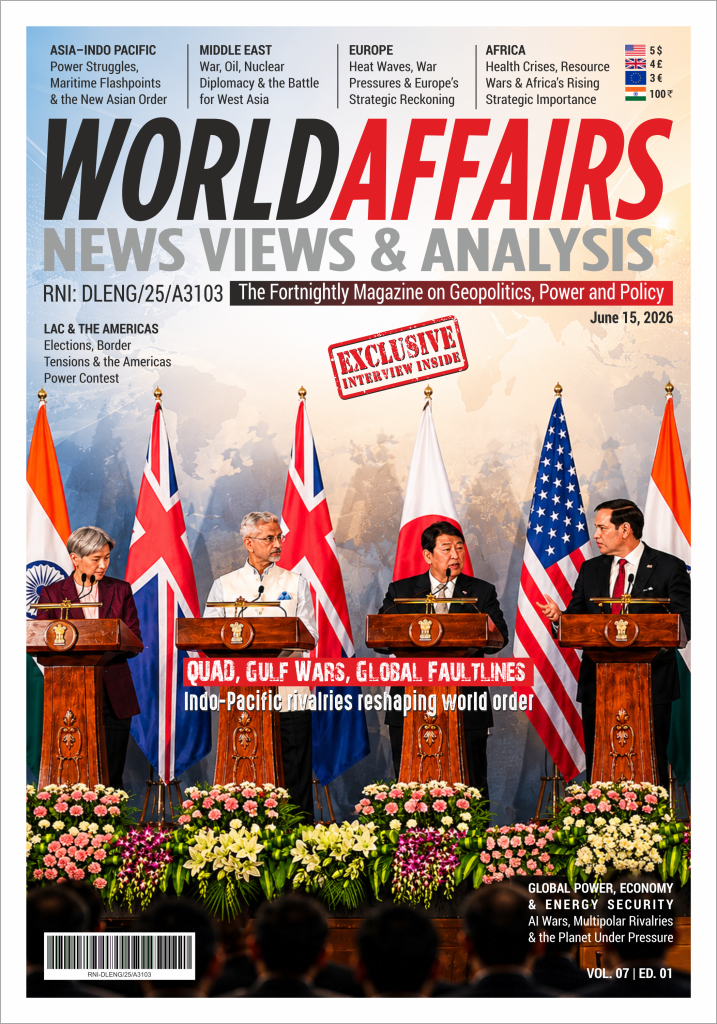
In a WorldAffairs – News, Views & Analysis exclusive, when Editor-in-Chief Dr. M. Shahid Siddiqui sat down with Uganda’s Foreign Minister, Gen. Odongo Jeje Abubakhar, the message that emerged was not dressed up in diplomatic ambiguity. It was direct, almost matter-of-fact: Africa is no longer waiting to be included in the global order. It is stepping forward to shape it.
“Africa is no longer on the margins of global affairs, it is becoming central to them,” the Minister said. What makes this conversation striking is not just what was said, but how it was said. There is a noticeable shift in tone less about aspiration, more about arrival. For decades, discussions about Africa in global policy circles have been framed in the language of potential. In Kampala, that language felt outdated.
Instead, what surfaced through the WorldAffairs interview was a quiet confidence, grounded not in rhetoric, but in reality.
“The multipolar world is not an idea anymore, it is a reality unfolding before us.”
That line lingered. Because it speaks not only to shifting global power, but to who now gets to define it.
From where Uganda sits geographically in the heart of East Africa, and diplomatically within an increasingly assertive continent, the world looks different. Power is no longer concentrated in a few capitals. It is diffusing, stretching across regions, platforms, and partnerships. And Africa, long treated as peripheral, is finding itself at the center of that shift.
The Minister returned often to a simple but telling point: Africa is no longer reacting.
“Africa is not just adapting to global shifts, we are helping define them.”
It is easy to dismiss such statements as standard diplomatic optimism. But the context makes them harder to ignore. The global economy is being rewired around energy transitions, critical minerals, food security, and new trade routes. In each of these, Africa holds cards it did not fully play before. And it knows it.
Part of that awareness is visible in how African countries are choosing where and how to engage. When Dr. Siddiqui raised Uganda’s participation in BRICS discussions, the response was telling. The Minister did not frame BRICS as an alternative bloc, but as an expanding platform, one that gives greater voice to countries long underrepresented.
“BRICS represents the voice and aspirations of the Global South, it is about fairness, inclusion, and a more balanced world order.”
There is, beneath that statement, a quiet critique of the existing system one that many in the Global South feel no longer reflects present realities. But unlike in the past, the response is not limited to critique. It is moving toward construction of new platforms, new alignments, new rules.
That same recalibration is evident in Africa’s partnerships. When the conversation turned to India, the tone shifted again, this time to one of familiarity and trust.
Recalling Prime Minister Narendra Modi’s address in Kampala, the Minister described it as more than symbolic. It was, in his words, defining.
“India approaches Africa with respect, partnership, and shared growth not dependency.”
In a world where great-power competition often carries undertones of influence and control, that distinction matters. And it helps explain why India’s footprint across Africa in infrastructure, digital technology, healthcare, and education has been received differently.
“India is not just a partner, it is a trusted collaborator in Africa’s transformation.”
Yet what stands out most is not any single partnership, but the approach behind them. Africa, as reflected in this conversation, is not aligning itself with one power center over another. It is widening its options.
“Cooperation must strengthen sovereignty, not weaken it.”
That line, perhaps more than any other, captures the underlying doctrine. Strategic autonomy is no longer an abstract principle, it is becoming a guiding rule.
Uganda’s own trajectory offers a glimpse of how this plays out on the ground. With its relative stability and central location, it is positioning itself as a regional hub quietly, steadily, without the noise that often accompanies larger economies. Trade, investment, and regional integration are not distant goals; they are active priorities.
At the same time, the Minister did not shy away from the continent’s challenges. Security concerns remain real, particularly across parts of East and Central Africa. But even here, the framing has shifted.
“African problems need African solutions, supported by global cooperation.”
It is a statement of ownership one that signals a move away from dependency toward responsibility.
The same sense of ownership carries into economic thinking. The African Continental Free Trade Area (AfCFTA), often discussed in abstract terms, was described in practical ones.
“Economic integration is the key to Africa’s future strength.”
If it works as intended, AfCFTA could change how Africa trades not just with the world, but with itself. And in doing so, it could alter the continent’s position in the global economy in ways that are only beginning to be understood.
But perhaps the most human moment in the conversation came when the focus shifted to Africa’s youth.
“Our young people are our greatest asset, but we must invest in their future.”
There was no policy jargon in that line just a recognition of what is at stake. Africa’s demographic story is often told in big numbers. Here, it felt more immediate. More urgent.
Because ultimately, the continent’s trajectory will not be decided in summits or statements, but in classrooms, workplaces, and opportunities created or missed.
As the conversation drew to a close, there was a sense that this was less an interview and more a marker of transition. Not dramatic, not sudden, but unmistakable.
Africa is not asking for a seat at the table anymore.
It is building its own and, increasingly, setting the terms for who gets to sit at it.
And perhaps the most important takeaway from this WorldAffairs exclusive is this: the shift is already underway. The only real question is who is paying attention.
– News Desk