
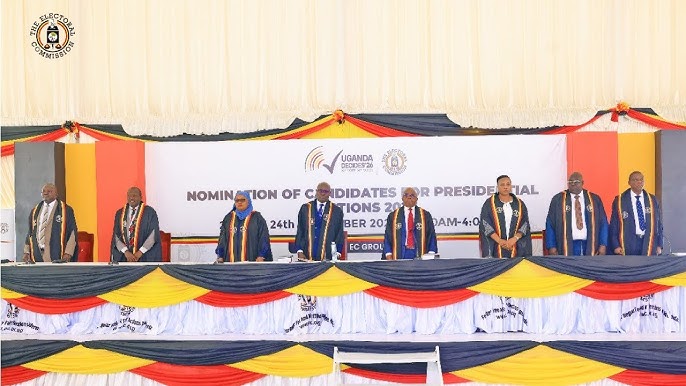


The exclusion of Uganda women presidential candidates from the 2026 election has drawn strong criticism from activists and civil society leaders. This week, Uganda’s Electoral Commission cleared eight men—including President Yoweri Museveni—to run for president. Not one woman made the final list, even though 15 initially expressed interest and three formally submitted nomination papers.
Nancy Kalembe, Yvonne Mpambara, and Nabirah Birungi all filed their forms, but officials disqualified them for allegedly failing to meet requirements like verified district signatures. Activists argue the process lacked transparency and fairness. Ritah Aciro, executive director of the Uganda Women’s Network (UWONET), called the outcome a clear sign that “patriarchy is alive and thriving.” She added, “Uganda is experiencing reversals and backlash to the gender agenda it once championed.”
Women make up the majority of Uganda’s population and active political party members, yet they remain shut out of top leadership roles. Aciro pointed to deep barriers: negative social norms, prejudice, the commercialization of politics, and rising electoral violence—including targeted sexual violence—that push qualified women away.
Charity Ahimbisibwe, who leads the Electoral Laws Institute Uganda, stressed the gap between law and reality. “Uganda promotes equality on paper,” she said. “But in practice, women stay confined to affirmative action seats and rarely get support to run for president.” Past female hopefuls like Maureen Kyalya in 2016 and Nancy Kalembe in 2021 ran as independents and received far less media attention than male rivals.
Ahimbisibwe also tied the issue to Uganda’s political culture. “Women reject violence. In peaceful democracies like Botswana, Namibia, and Tanzania, women have reached the top. Until Uganda transforms its politics, women will stay sidelined,” she stated.
Perry Aritua of the Women’s Democracy Network–Uganda highlighted structural challenges. “Collecting signatures from 98 districts without party backing or resources is nearly impossible,” she explained. Party-backed male candidates mobilize quickly, while independent women face steep logistical and financial hurdles. Aritua accused the Electoral Commission of providing poor civic education and disqualifying women at the last minute. “Some women submitted more than enough signatures but heard they were insufficient just days before nomination,” she said.
Eunice Musiime of Akina Mama wa Afrika noted that Uganda’s money-driven politics automatically blocks under-resourced women. “The nomination rules favor the wealthy and well-connected,” she said, calling the system biased from the start.
Electoral Commission spokesperson Julius Mucunguzi defended the process. He explained that the Presidential Elections Act does not require female candidates. “It only lists qualifications like citizenship, voter registration, a degree, and district endorsements,” he said. “We accept any candidate—male or female—who meets them.”
On NTV’s Ebigambo Tebitta, Jolly Tukamushaba of the National Unity Platform blamed the government for neglecting women’s leadership development. “Many barriers still hold women back,” she said, and called for reforms to level the political field.
Activists now warn that without systemic changes—fairer nomination rules, real party support for women, less electoral violence, and equitable campaign financing—the presidency will remain out of reach for Ugandan women. Despite their numbers, skills, and contributions, Uganda women presidential candidates face a political system stacked against them. Until leaders fix these flaws, gender equality in executive power will stay out of reach.
READ: Dangote Refinery Fires Workers Amid Maintenance Shutdown