
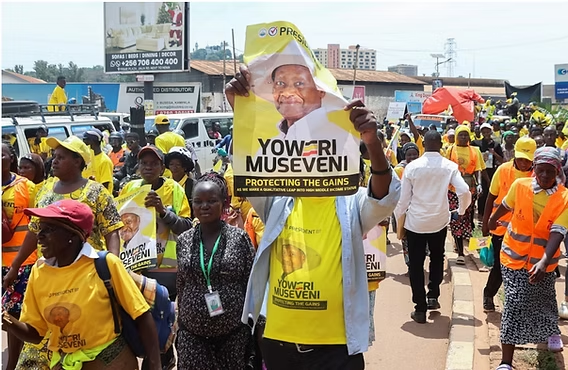


Uganda’s 2026 general elections represent one of the most consequential political moments in the country’s modern history. With Yoweri Museveni seeking a seventh term in office, the vote raises fundamental questions about leadership continuity, democratic governance, economic direction, and generational change in Uganda. After four decades at the helm, Museveni’s candidacy has once again placed Uganda’s political future under intense national and international scrutiny.
As campaigning intensifies, the 2026 elections are not simply about who wins power, but about what kind of state Uganda wants to be in the years ahead.
Museveni’s Long Rule and the Seventh Term Question
Museveni first came to power in 1986 after a protracted guerrilla war, promising stability, security, and economic recovery. Over the years, his leadership oversaw relative political calm compared to previous eras, alongside gradual economic reforms and regional influence.
However, constitutional amendments removing presidential term and age limits have enabled Museveni to remain in power well beyond the originally envisioned transition period. His seventh-term bid therefore symbolizes continuity for supporters and democratic stagnation for critics.
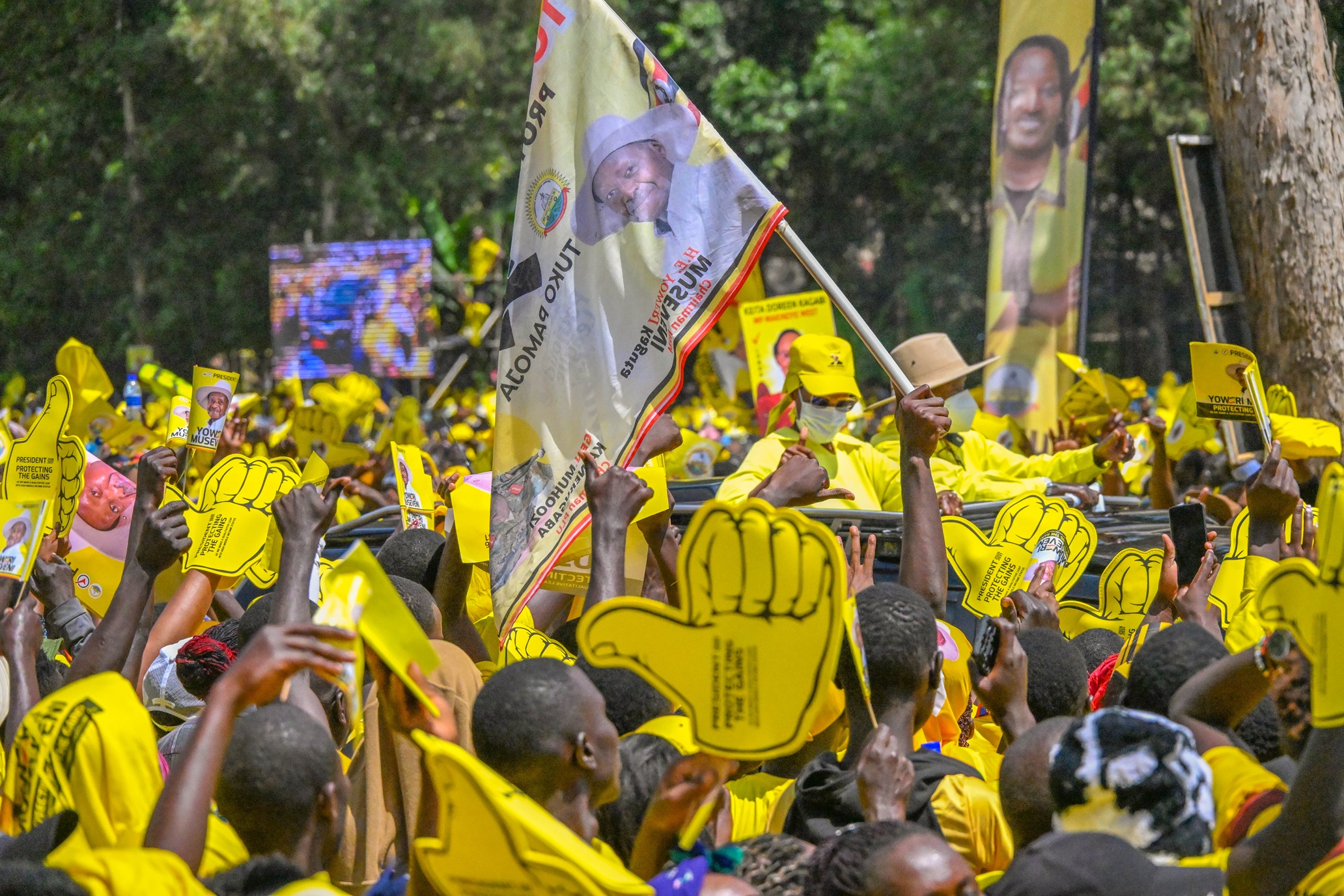
For many Ugandans, especially younger voters who have known no other president, the election has become a referendum on longevity in leadership and the meaning of political renewal.
Governance, Democracy, and Institutional Trust
One of the central stakes in the 2026 elections is the strength of Uganda’s democratic institutions. Opposition parties and civil society groups argue that repeated extensions of Museveni’s rule weaken checks and balances, limit political competition, and erode public trust in institutions such as parliament, the judiciary, and electoral bodies.
Supporters of the ruling establishment counter that continuity ensures stability and prevents political disruption. They argue that Uganda’s institutions have matured under Museveni and that gradual reform is preferable to abrupt change.
The credibility of the electoral process itself will be closely watched, with transparency, media freedom, and political space forming key benchmarks of legitimacy.
Economic Direction and Cost of Living Pressures
Economic issues are at the heart of voter concerns in 2026. Uganda’s youthful population faces high unemployment, rising living costs, and limited access to quality jobs. While infrastructure development and regional trade initiatives have expanded under Museveni’s leadership, critics argue that growth has not translated into broad-based prosperity.
The election will influence policies on taxation, public spending, debt management, and private-sector growth. For many voters, the key question is whether a seventh Museveni term can deliver meaningful economic inclusion or whether new leadership is needed to reset priorities.
Rural livelihoods, urban informal employment, and access to social services are likely to feature prominently in campaign messaging across the political spectrum.
Security, Stability, and Regional Influence
Museveni’s leadership has long been associated with security and regional engagement. Uganda plays an active role in regional peacekeeping and security cooperation, which the government presents as evidence of experienced leadership.
In the context of regional instability, supporters view Museveni as a stabilizing figure whose continuity reassures investors and international partners. Critics, however, question whether security narratives are used to justify political control and limit dissent.
The 2026 elections will test whether voters prioritize continuity in security policy or demand reforms that balance stability with civil liberties.
Youth, Opposition, and Political Change
Uganda’s demographics are a critical factor in the 2026 vote. A majority of the population is under 35, many of whom face economic uncertainty and feel disconnected from long-standing political elites.

Opposition movements have increasingly drawn support from urban youth, leveraging social media, music, and grassroots mobilization. These dynamics challenge traditional campaign strategies and test the ruling party’s ability to connect with younger voters.
The election outcome will reveal whether youth-driven political energy can overcome structural and institutional barriers or whether entrenched power networks remain dominant.
International Relations and Democratic Image
Uganda’s elections carry implications beyond its borders. International partners, donors, and investors closely monitor governance trends, human rights conditions, and electoral credibility. A disputed or contested election could affect diplomatic relations and economic cooperation.
Conversely, a peaceful and credible process would strengthen Uganda’s regional standing and reinforce confidence in its political system. Museveni’s seventh-term bid therefore has implications for Uganda’s global image and long-term partnerships.
The Stakes for Uganda’s Future
At its core, the 2026 elections force a national conversation about leadership succession, accountability, and national identity. Supporters of Museveni emphasize experience, stability, and continuity. Opponents stress renewal, institutional reform, and democratic deepening.
The stakes extend beyond individual personalities. The vote will influence how power is transferred in Uganda, how institutions function, and how citizens engage with politics in the future.
Uganda’s 2026 elections mark a defining moment as President Yoweri Museveni seeks a seventh term in office. What is at stake is not only the continuation of one leader’s rule, but the direction of governance, economic opportunity, and democratic practice in the country. As Ugandans head to the polls, the outcome will shape Uganda’s political landscape for years to come, determining whether continuity or change defines the next chapter of its national story.