
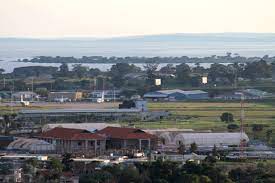


A recent controversy has emerged regarding the ownership of Plots M19 and M26, on which the State House and the National Water Sewerage Corporation are situated. This article aims to shed light on the historical background and legal aspects surrounding the land in question, providing a comprehensive analysis of its ownership status.
Buganda Land Board and the 1962 Constitution
To understand the ownership of the aforementioned plots, we must delve into the historical context. The Buganda Land Board, established in 1963, was a constitutional body within the provisions of the 1962 Constitution. Under this constitution, the Buganda Land Board was mandated to hold and manage any land vested in it for the benefit of the people.
The Buganda Agreement of 1900 and Land Allotment
A critical point of reference in this discussion is the 1900 Buganda Agreement, which allocated half of the land in Buganda to chiefs and notables as private property in perpetuity, while the remaining land became crown land. The 1908 Land Law further clarified that mailo land, a form of land tenure, could be freely sold, gifted, or willed by the owner. However, official mailo, which encompassed the 350 square miles granted to the Kabaka under the 1900 Agreement, was distinct and meant to be held by the chief for the duration of their chieftainship.
Ownership of Official Mailo and Confiscation Claims
It is essential to note that official mailo was never owned by traditional rulers as individuals and thus could not have been confiscated from them. If it were the case, the abamasaza (county chiefs) would also have a legitimate claim for restitution, as their holdings were covered under the Official Estates. The mailo allotted to traditional rulers in the 1900 Agreement was preserved and protected under subsequent constitutional provisions.
Buganda Land Board’s Role and Ownership Status
Under the 1962 Public Lands Act, crown lands in Buganda were vested in the Buganda Land Board as freehold, distinguishing them from the official mailo held under the Official Estates Act. The Buganda Land Board, acting as a custodian of public land, administered the freehold land until the federal unit of administration ceased to exist in 1967.
The Traditional Rulers (Restitution of Assets and Properties) Act of 1993
The Traditional Rulers (Restitution of Assets and Properties) Act of 1993 aimed to address restitution claims. An MOU was signed between the Buganda Traditional or Cultural Leadership and the Government of Uganda to ensure the implementation of this agreement. However, prior to the establishment of the implementation team, the Buganda Cultural or Traditional leadership had already acquired numerous certificates of title.
Proposed Steps for Resolution
Had the implementation team been formed, it would have facilitated the verification of legal ownership, assessed the rights of current occupants, devised compensation or settlement proposals, conducted surveys, and amended the Traditional Rulers (Restitution of Assets and Properties) Act of 1993, as necessary. Additionally, the transfer of properties to a Public Trust, as prescribed by Article 246(3)(a) of the constitution, would have been incorporated.
Ownership of Plots M19 and M26
Contrary to claims made, the land in question, including Plots M19 and M26, has never been Kabaka’s land. These plots, originally crown land, were converted to freehold under the Buganda Land Board in 1963 and were administered as public land under the Buganda Land Board until the dissolution of the federal unit of administration in 1967.
Conclusion
Understanding the historical context and legal provisions surrounding land ownership is crucial whenevaluating claims. In the case of Plots M19 and M26, the evidence indicates that they have never been owned by the Kabaka individually but have consistently remained public land, administered by the Buganda Land Board. Resolving land disputes requires careful examination and adherence to constitutional provisions, ensuring equitable outcomes for all parties involved.
For any Opinions, breaking news, Exposes, story ideas, human interest articles or Exclusive inside Stories; email Uganda Daily on: [email protected]