


The Tragic Events of June 3rd, 1886, Forever Etched in Uganda’s History
Introduction:
On June 3rd, 1886, a dark chapter unfolded in the heart of Uganda’s history. Twenty-two Ugandans paid the ultimate price for their unwavering commitment to their ancestral customs and refusal to renounce their Christian faith. These brave individuals, known as the Ugandan Martyrs, became symbols of resistance against the encroachment of Western influences and the clash between traditional beliefs and the teachings of Christianity. This article delves into the events leading to the martyrdom and the lasting impact of their sacrifice on Ugandan society.
The Clash of Cultures:
Uganda in the late 19th century was undergoing a profound cultural and religious transformation. Christian missionaries had arrived, spreading their faith and challenging the long-held traditions and spiritual practices of the region. This clash of cultures created tension and uncertainty among the Ugandan people, including King Mwanga, who saw the spread of Christianity as a threat to his rule.
The Persecution Begins:
In his quest to eliminate the influence of the “white man’s God,” King Mwanga convened a gathering of his court on that fateful day in 1886. Determined to identify those who had embraced Christianity, he interrogated each individual present. When the Christians were discovered, the king demanded that they renounce their faith, hoping to regain control over his subjects.
The Martyrs’ Refusal:
Despite the grave consequences, the Ugandan Martyrs stood unwaveringly in their faith. They refused to renounce Christianity, firmly declaring their allegiance to their newfound beliefs. Their resolute stance shocked King Mwanga, who saw their defiance as a direct challenge to his authority.
The March to Martyrdom:
Condemned to death for their refusal to abandon Christianity, the Ugandan Martyrs were led on a harrowing march to the traditional execution site. Along the way, some were given the opportunity to recant their faith and save their lives. However, these courageous individuals chose martyrdom over compromising their convictions.
The Fiery Furnace:
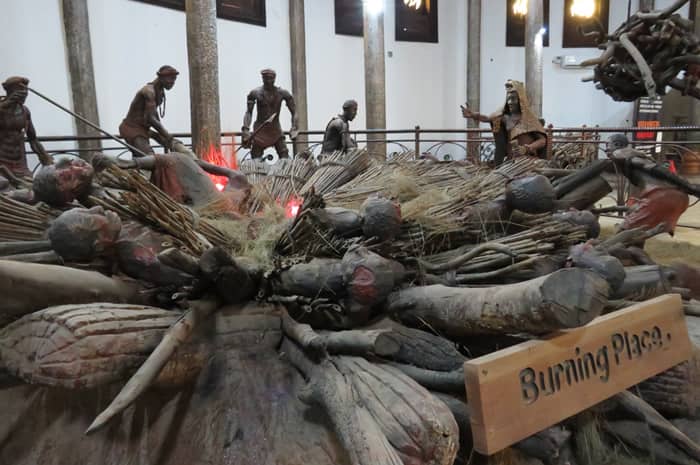
At the execution site, a burning furnace awaited those who remained steadfast in their Christian faith. One by one, the Ugandan Martyrs were thrown into the flames, their bodies consumed by fire. Their sacrifice represented an indomitable spirit and an unwavering commitment to their beliefs.
Legacy and Canonization:
The Catholic Church recognized the extraordinary faith and courage displayed by the Ugandan Martyrs. On June 6th, 1920, they were beatified, acknowledging their martyrdom and sanctity. Further recognition came on October 18th, 1964, when Pope Paul VI canonized them, officially declaring them saints of the Catholic Church.
Remembering the Martyrs:
To honor the Ugandan Martyrs, June 3rd was designated as the Feast Day of Charles Lwanga and the twelve other Catholics. This solemn occasion serves as a reminder of the martyrs’ sacrifice and the ongoing struggle to preserve cultural heritage while embracing religious diversity in Uganda.
Conclusion:
The martyrdom of the Ugandan Martyrs on June 3rd, 1886, remains an indelible chapter in Uganda’s history. Their unwavering faith, courage, and commitment to their ancestral customs and Christianity continue to inspire generations. Their sacrifice serves as a powerful reminder of the ongoing importance of religious freedom, cultural preservation, and the pursuit of harmony amidst a diverse society. The Ugandan Martyrs will forever hold a revered place in the hearts of the Ugandan people and stand as a testament to the resilience of the human spirit.
For any Opinions, breaking news, Exposes, story ideas, human interest articles or Exclusive inside Stories; email Uganda Daily on: [email protected]