
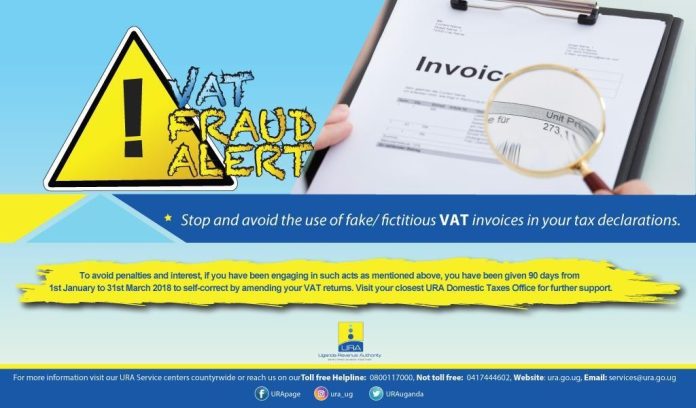


A growing scandal around invoice trading fraud in Uganda is shedding light on how dormant companies are being hijacked to facilitate massive tax evasion. The Uganda Revenue Authority (URA) uncovered this scheme during a routine investigation that began with a single suspicious company and quickly spiraled into a network of abuse.
What was discovered has raised serious concerns about system vulnerabilities, unethical tax consultants, and weak oversight around the use of electronic invoicing.
How Invoice Trading Fraud Works
At the heart of the scheme was a company that had ceased operations years ago. The director reportedly instructed a tax consultant to deactivate its tax profile. Instead, the consultant altered its profile—changing contact details and email credentials—without the owner’s knowledge.
This dormant business was then used to generate fake electronic invoices, allowing various client companies to illegitimately claim tax credits through Uganda’s national e-invoicing system.
If you’re unfamiliar with how electronic invoicing operates in Uganda, you can refer to URA’s official e-invoicing guide to understand how the system is meant to function.
Substantial Findings From the URA Investigation
The URA audit found that over a span of two and a half years, the dormant company had generated a high volume of fictitious sales. Despite having no physical operations or staff, the company’s digital tax records showed constant invoicing activity.
These fraudulent entries were detected when cross-referenced against actual business activities, revealing inconsistencies. The companies benefiting from the scheme were using these invoices to reduce tax liabilities, effectively cheating the tax system.
Involvement of Tax Consultants in Invoice Trading Fraud
Investigators traced much of the fraud back to a tax consultancy firm. A former staff member was found to have manipulated multiple URA tax profiles, issuing fictitious invoices under stolen identities.
Contact details linked to this consultant appeared repeatedly in the altered tax records, providing a clear digital trail. One individual whose personal information was used denied any knowledge of the newly created business entity. This highlights how easily trusted information can be abused when oversight is lacking.
To help understand the broader regulatory environment, you might explore Uganda’s Tax Procedures Code Act which outlines compliance responsibilities for taxpayers and consultants.
URA’s Response to the Invoice Trading Fraud
In response to the scheme, URA deactivated the affected Tax Identification Number (TIN) to stop further misuse. They also launched a broader investigation into companies and consultants linked to the case.
Furthermore, URA is expected to:
- Tighten access to tax registration platforms
- Require stronger authentication for profile edits
- Enforce stricter consultant accountability
- Work closely with border security and digital audit units
It’s also important for thee public to have valid and authentic TIN numbers. An excellent resource on to Apply for a TIN is available at URA TIN guideline
A Call to Strengthen Oversight and Controls
This case of invoice trading fraud shows how systemic weaknesses can be exploited when digital infrastructure is not adequately protected. URA’s ongoing investigation aims to bring everyone involved to justice and reinforce digital controls.
It also reinforces the importance of internal awareness, especially among tax consultants and finance departments. Companies must take responsibility for who accesses their tax credentials and regularly review their tax profiles for suspicious changes.
The growing trend of invoice trading fraud is a warning to all stakeholders—from business owners to consultants—to secure their systems and uphold ethical standards. URA’s aggressive investigation and reform agenda aim to rebuild trust in Uganda’s tax infrastructure and protect public revenue.
By enforcing accountability and enhancing digital controls, the country can take a major step forward in the fight against economic crime.