


Uganda’s Tenfold Plan Starts with Shs17.18T Budget
The government has officially launched the Tenfold Growth Strategy Uganda by releasing Shs17.18 trillion for the first quarter of the 2025/2026 financial year. This initial release, covering July to September, accounts for 23.7% of the approved budget.
The strategy aims to drive inclusive and sustainable growth. It focuses on boosting exports, innovation, tourism, and human capital. Uganda also hopes to leverage this plan to achieve double-digit GDP growth and strengthen its role in regional trade.
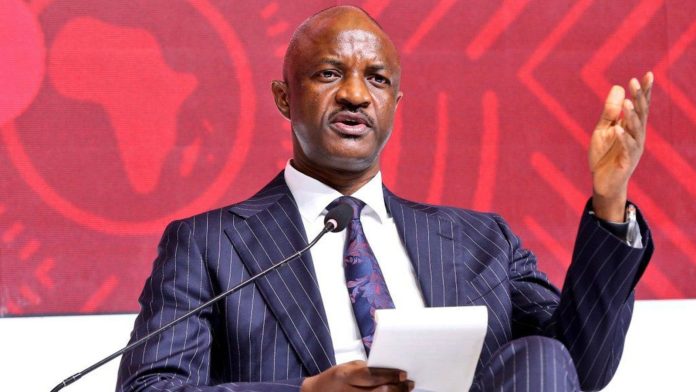
While addressing the media, Secretary to the Treasury Ramathan Ggoobi said the release promotes efficiency. He directed all accounting officers to pay salaries and pensions by the 28th of every month. Furthermore, he instructed them not to commit funds beyond approved budgets and to transact strictly in Uganda shillings.
As part of the breakdown, Shs2.261 trillion will go to salaries, while pensions and gratuity will consume Shs482.76 billion. Parliament will receive Shs249.38 billion, and the Electoral Commission will take Shs468.72 billion. Moreover, allocations were made for the Judiciary, Auditor General, and National Planning Authority.
In the ATMS cluster, agro-industrialisation received Shs215.28 billion. Of this, Shs62.41 billion is for research and operations, and Shs152.86 billion targets development. The tourism sector received Shs20.5 billion. Oil, gas, and minerals got Shs26 billion. Additionally, science, technology, and innovation secured Shs139.13 billion, including Shs33 billion for artists and Shs83.3 billion for research and innovation.
Security was another major priority. The Ministry of Defence received Shs719.12 billion. Uganda Police got Shs130.73 billion. Other key institutions also received allocations: State House received Shs108.38 billion, Uganda Prisons Shs87.15 billion, and ISO and ESO received Shs39.2 billion and Shs86.9 billion respectively.
Infrastructure development received one of the highest allocations. The Ministry of Works was given Shs1.076 trillion, including Shs942.9 billion for contractor payments. Additionally, the Ministry of Energy received Shs420.76 billion for rural electrification, power generation, and mineral activities. Kampala Capital City Authority got Shs148.32 billion to improve roads and drainage systems.
Meanwhile, education and health sectors saw substantial investment. The Ministry of Education received Shs143.75 billion, with Shs63.33 billion supporting the USEEP and ULEARN programs. Public universities and training institutes received Shs157.73 billion, while the Ministry of Health got Shs262.88 billion. This includes support for infrastructure and programs like Gavi and the Global Fund.
The National Medical Stores received Shs173.96 billion to purchase essential medicines. The Ministry of Gender secured Shs118.23 billion, which includes Shs83.64 billion for SAGE and subventions. Uganda Cancer and Heart Institutes were allocated Shs80.18 billion. Furthermore, regional hospitals such as Mulago and Butabika received Shs40.99 billion. Local governments got Shs382.03 billion to support operations and contract-bound projects.
Although funding is flowing, experts have raised concerns. Dr. Arthur Bainomugisha from ACODE noted that project delivery still lags at the local level. In his view, delays, poor supervision, and abandoned works continue to weaken impact.
Despite these issues, Mr. Ggoobi highlighted Uganda’s resilience. Growth averaged 6.9% in the last three quarters. Inflation stayed within target, reaching 3.9% in June, slightly above May’s 3.8%. Additionally, the Uganda shilling gained strength against the dollar.
Export earnings reached $2.6 billion in quarter three of FY 2024/2025. That marked a 39.1% rise from $1.9 billion in the same period the year before. Coffee and cocoa exports performed especially well due to better volumes and pricing.
Remittances also increased sharply. Ugandans abroad sent $304.48 million in Q3, up from $231.68 million the previous year. This made Uganda one of Africa’s top 10 countries for remittance inflows.
Ultimately, the Tenfold Growth Strategy Uganda is designed to drive national transformation. With strong capital allocations and a clear vision, the government believes it can expand Uganda’s economic potential and global competitiveness.
Read: Uganda FY2025/2026 Budget: Kasaija Hails Economic Growth