
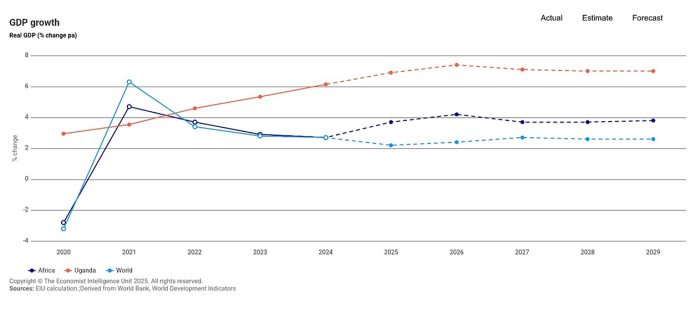


Uganda, a landlocked country in East Africa, has shown remarkable resilience and growth in its economy over the past few years. With an expanding population, a burgeoning middle class, and a range of emerging industries, Uganda’s economy is poised for continued growth into 2026 and beyond. As the country moves toward more diversified sources of revenue, it faces both significant opportunities and challenges.
In this article, we’ll explore the economic growth trends in Uganda, identify key sectors driving the economy, and offer insights into the challenges and opportunities that will shape Uganda’s future economic trajectory.
1. Steady GDP Growth and Economic Resilience
Uganda’s economy has experienced steady growth over the past decade, driven by sectors such as agriculture, manufacturing, services, and construction. According to the World Bank, Uganda’s GDP has been growing at an average rate of around 5% annually, despite global economic fluctuations and regional challenges.

In 2026, Uganda’s GDP is expected to continue expanding, driven by key reforms and investments in infrastructure, energy, and technology. The government’s focus on industrialization and economic diversification is central to ensuring the sustainability of this growth.
The expansion of agricultural exports, including coffee, tea, and cocoa, has bolstered Uganda’s foreign exchange earnings, making it one of the top exporters of agricultural products in East Africa. Additionally, the ongoing investments in mining and oil have the potential to increase Uganda’s revenue, though these sectors remain in their infancy.
2. The Rise of Non-Agricultural Sectors
While agriculture remains a backbone of Uganda’s economy, non-agricultural sectors are increasingly contributing to the country’s GDP. This trend is vital for the country’s continued growth, as it reduces reliance on traditional agricultural exports and creates more job opportunities and value-added industries.
Manufacturing and Industrialization
The government has introduced several policies aimed at driving industrialization, particularly in sectors like construction materials, textiles, cement, and food processing. With a growing middle class demanding more consumer goods, Uganda’s manufacturing sector is projected to expand significantly in 2026.
The establishment of industrial parks and special economic zones (SEZs) is helping attract both local and foreign investment into manufacturing. The country’s strategic location in East Africa, close to key regional markets like Kenya, Tanzania, and the Democratic Republic of Congo (DRC), also positions Uganda as an industrial hub for the region.
Technology and Digital Economy
The digital economy is another promising area for growth. Uganda’s expanding internet penetration and mobile connectivity are driving demand for e-commerce, fintech, and digital services. The rise of mobile money platforms like MTN Mobile Money and Airtel Money has significantly enhanced financial inclusion, allowing millions of Ugandans access to banking services without a traditional bank account.
In addition, the growing interest in technology startups and innovation hubs is leading to a more vibrant tech ecosystem. This is helping Uganda leverage its young population and improve the availability of tech talent.
3. Infrastructure Development: A Key Driver for Growth
One of the most significant factors driving Uganda’s economic growth is infrastructure development. The Ugandan government has made substantial investments in roads, energy, and transportation to support industrialization and improve living standards.
Energy Sector and Power Generation
Uganda has made notable progress in addressing its energy needs, with the expansion of hydropower and solar energy projects. The Karuma Dam, currently under construction, is set to add significant capacity to Uganda’s power grid, improving electricity availability for both domestic and industrial use. As Uganda continues to invest in renewable energy, it will reduce its dependency on imported fossil fuels, lowering costs for businesses and driving sustainable growth.
Transport and Connectivity
In recent years, Uganda has invested in upgrading its road infrastructure, including the construction of modern highways, bridges, and airports. Key projects such as the Kampala-Entebbe Expressway and the Kampala Railway Station have improved connectivity between key regions of the country and neighboring countries, boosting regional trade and investment opportunities.
4. The Role of Oil and Natural Resources
Uganda is set to become an oil-producing nation, with oil reserves estimated at over 6.5 billion barrels. The country is in the process of developing its oil fields in the Albertine Graben region, and the construction of an oil pipeline to Tanzania is expected to begin soon. These developments are poised to significantly boost the country’s revenue, create jobs, and enhance its energy security.
However, the oil sector remains complex, and Uganda must navigate challenges such as environmental concerns, community involvement, and global market volatility to ensure the sector benefits the broader economy.
5. Challenges Facing Uganda’s Economic Growth
While Uganda’s economic growth is promising, several challenges need to be addressed for sustained prosperity.
Youth Unemployment
One of the most pressing challenges is youth unemployment. With a median age of just 15 years, Uganda has a very young population. While this presents opportunities for growth, it also poses a challenge in terms of creating sufficient job opportunities for the expanding workforce.
The government must focus on expanding vocational training, entrepreneurship programs, and investing in sectors that can absorb a large number of young people, such as agriculture, construction, and technology.
Corruption and Bureaucracy
Despite improvements, corruption and bureaucratic inefficiencies remain significant hurdles for entrepreneurs and investors in Uganda. The government must continue its efforts to combat corruption and streamline administrative procedures to create a more business-friendly environment.
Climate Change and Agriculture
Uganda is heavily reliant on rain-fed agriculture, making the sector vulnerable to climate change. Erratic weather patterns, including droughts and floods, have affected food production and the livelihoods of farmers. The government must invest in climate-resilient agricultural practices and enhance the sustainability of the sector.
6. Opportunities for Future Growth
As Uganda continues to modernize its economy, several growth sectors present significant opportunities for both local and foreign investors. Key areas include:
- Renewable energy: With abundant solar, hydro, and geothermal resources, Uganda has the potential to become a regional leader in clean energy.
- Tourism: With its rich wildlife and cultural heritage, Uganda’s tourism sector offers untapped potential for growth.
- Infrastructure: Continued investments in road, rail, and port infrastructure will drive trade and economic integration.
7. Conclusion
Uganda’s economic growth trends in 2026 point to a bright future, with opportunities for both domestic entrepreneurs and foreign investors. The country’s growing population, strategic location, and commitment to industrialization and infrastructure development make it an attractive destination for investment.
While challenges such as youth unemployment, corruption, and climate change need to be addressed, the country’s focus on diversification, innovation, and sustainability bodes well for long-term success. With the right policies and investments, Uganda has the potential to become one of Africa’s most vibrant and dynamic economies in the years to come.