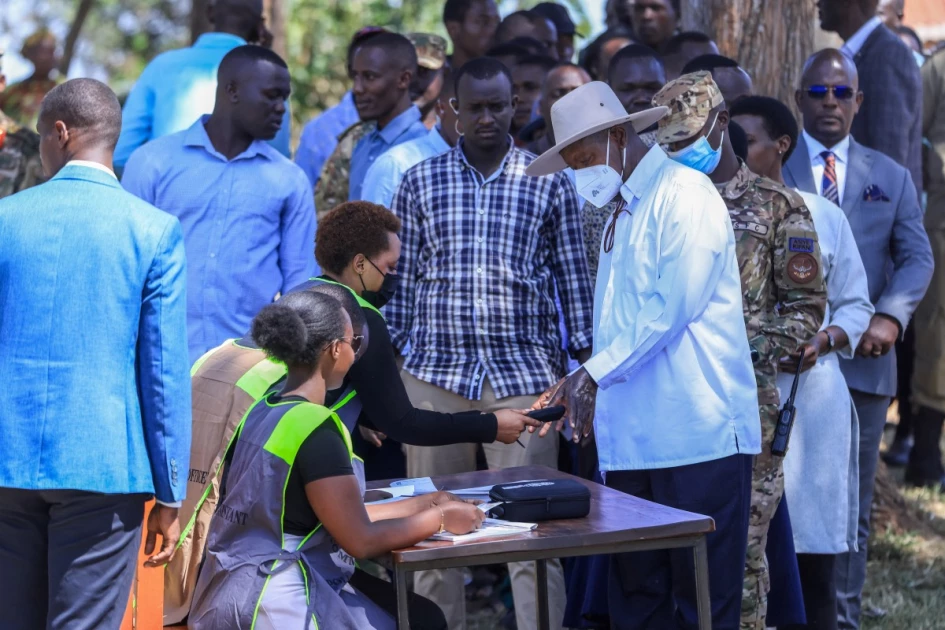
Kampala, Uganda – The 2026 general elections in Uganda officially closed on Thursday after a chaotic day of voting marked by significant delays, a nationwide internet blackout, and technical failures. Despite these challenges, Ugandans cast their ballots in an election that has garnered international attention due to the tense political climate and the longstanding rule of President Yoweri Museveni.
Museveni, who has been in power for nearly four decades, is seeking to secure a seventh term, and is widely expected to win. His grip on Uganda’s state and security apparatus, combined with his control over the electoral system, positions him as the clear frontrunner. However, the opposition remains vocal, with singer-turned-politician Bobi Wine representing a formidable challenge.
Delays, Malfunctions, and Allegations of Rigging
Voting on election day in Uganda was marred by long delays, especially in Kampala, the country’s capital. In many polling stations, ballot boxes arrived late, and biometric voter verification machines failed to function properly. This has led to accusations that the election process was being manipulated. Bobi Wine, who has positioned himself as the “ghetto president,” accused the government of “massive ballot-stuffing” during the internet shutdown, which he claimed was designed to facilitate fraud.
“I put my right… thumbprint. The machine did not accept it. I put my left, it did not accept it,” Museveni said after voting, describing the malfunctioning biometric machines. “Finally, my face was accepted, and I was able to vote,” he explained, adding that authorities would look into the issue. This admission raised further questions about the integrity of the voting process.
Election Amid Heavy Security and Tensions
Despite these technical failures, the election passed off without major violence, although there was a visible military and police presence throughout the country. The government had taken steps to prevent protests similar to those that have erupted in neighboring Kenya and Tanzania during previous elections. While the Ugandan Red Cross reported no significant incidents, security forces had arrested several opposition figures in the run-up to voting.
Bobi Wine, the 43-year-old opposition candidate, wore a flak jacket while campaigning, calling the election a “war” and accusing Museveni of being a “military dictator.” Human Rights Watch also condemned the suspension of 10 non-governmental organizations (NGOs), including election monitors, calling it a clear sign of the government’s intention to suppress independent oversight.
Controversial Internet Shutdown and Calls for Reform
The internet blackout, imposed by the government ahead of the election, remains one of the most controversial aspects of the election process. Officials justified the measure as a means of preventing the spread of misinformation and avoiding election-related violence. However, the United Nations and human rights groups have expressed concern, warning that such actions limit transparency and freedom of expression during critical moments.
The political environment in Uganda continues to be tense, with multiple opposition figures, including the prominent Kizza Besigye, facing legal troubles. Besigye, who has run against Museveni four times, was abducted in Kenya in 2024 and is now facing a treason trial in Uganda. This backdrop of political suppression has left many Ugandans frustrated, calling for a more democratic transition of power.
Economic Growth and Museveni’s Legacy
Despite the criticisms, Museveni retains significant support from segments of Uganda’s population. Many people still praise him for ending the post-independence chaos and bringing relative peace and stability to the country. Under his leadership, Uganda’s economy has experienced growth, particularly in agriculture and tourism, though corruption scandals continue to plague his administration.
Angee Abraham Lincoln, a 42-year-old Museveni supporter in Kampala, expressed satisfaction with the country’s stability, saying, “Peace and security in the country is very good. The party is well-organized.” While some may see Museveni as a stabilizing force, others are increasingly questioning his longevity in power, calling for a shift in leadership.
As Museveni seeks another term, the question of Uganda’s future leadership remains in the spotlight. With allegations of election manipulation and a tight grip on power, the country stands at a political crossroads. International observers, rights groups, and Ugandans alike await the final results, which are expected to be announced within 48 hours of the polls closing.