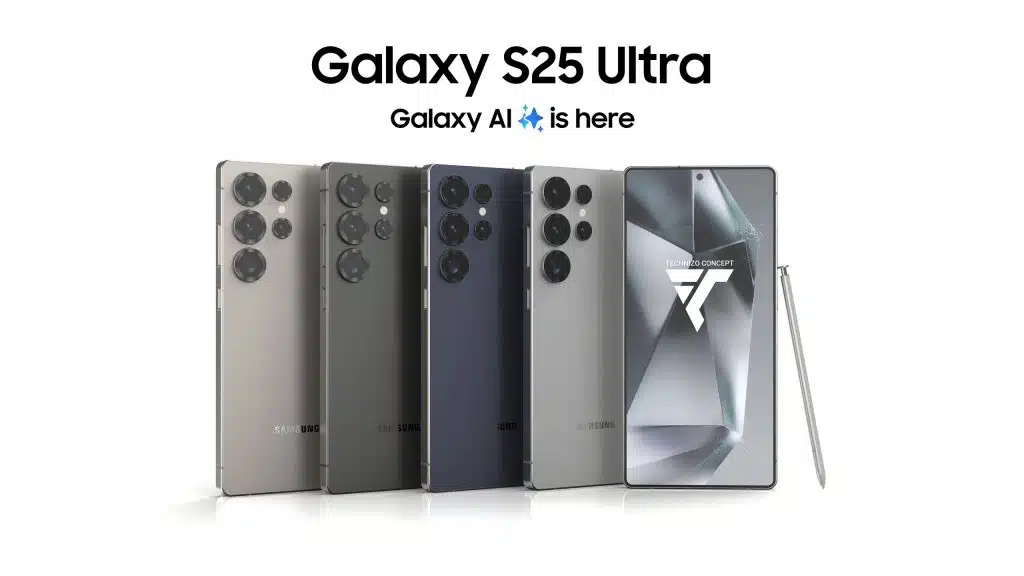


The Samsung Galaxy S25 series has arrived, showcasing some subtle design changes, modest hardware upgrades, and a strong emphasis on software innovation. While the hardware improvements are minimal, Samsung is focusing heavily on artificial intelligence (AI) and software enhancements with One UI 7.0. Here’s an in-depth review of the Galaxy S25 Ultra, S25+, and S25, examining their features, specifications, and overall performance.
Samsung Galaxy S25 Ultra: The Flagship Redefined
Key Specifications
- Display: 6.9-inch Dynamic AMOLED 2X, 120Hz, 1440x3088px, 2600 nits peak brightness.
- Processor: Snapdragon 8 Elite for Galaxy (3nm), Octa-core, Adreno 830 GPU.
- Camera:
- Main: 200MP, f/1.7, Laser AF, OIS.
- Telephoto 1: 50MP, f/3.4, 5x optical zoom.
- Telephoto 2: 10MP, f/2.4, 3x optical zoom.
- Ultrawide: 50MP, f/1.9, Dual Pixel AF.
- Battery: 5000mAh, 45W wired, 15W wireless charging.
- Build: Gorilla Glass Armor 2 front and back, titanium frame, IP68-certified.
- OS: Android 15 with One UI 7.0.
- Price: Starting at €1,450/£1,250.
Design and Build
The S25 Ultra has seen some refinement in its design. The bezels are 15% thinner, enabling a larger 6.9-inch display without increasing the phone’s overall size. The titanium frame and Gorilla Glass Armor 2 provide improved durability, making it one of the sturdiest Galaxy phones yet. The redesigned curved edges make it more comfortable to hold, and the weight is well-balanced despite the 5000mAh battery.
Camera Upgrades
The Ultra variant’s most significant upgrade is its 50MP ultrawide camera, replacing the previous 12MP sensor. It offers better low-light performance with an f/1.9 aperture and 8K video recording. The computational photography, powered by Snapdragon 8 Elite’s ISP, ensures exceptional clarity, even in challenging conditions. The ProVisual Engine, Samsung’s new camera processing algorithm, enhances low-light video quality and introduces Galaxy Log mode for professional-grade color grading.
Performance
The Snapdragon 8 Elite for Galaxy offers a noticeable boost in performance, with clock speeds reaching 4.47GHz. Early benchmarks show it surpassing competitors like the OnePlus 12 and previous-generation Galaxy S24 Ultra. The 12GB RAM across all configurations ensures smooth multitasking and gaming performance.
S Pen Changes
While the S Pen remains a hallmark of the Ultra series, it loses its Bluetooth and motion control features. While this change may disappoint some users, it doesn’t detract from the stylus’s core functionality.
Samsung Galaxy S25+: A Balanced Middle Ground
Key Specifications
- Display: 6.7-inch Dynamic AMOLED 2X, 120Hz, 1440x3088px.
- Processor: Snapdragon 8 Elite for Galaxy (3nm).
- Camera:
- Main: 50MP, f/1.8, Dual Pixel AF.
- Telephoto: 10MP, f/2.4, 3x optical zoom.
- Ultrawide: 12MP, f/2.2.
- Battery: 4900mAh, 45W wired, 15W wireless charging.
- Build: Gorilla Glass Victus 2, aluminum frame, IP68-certified.
- OS: Android 15 with One UI 7.0.
- Price: Starting at €1,150/£1,000.
Design
The S25+ follows the design language of its predecessor but is slightly thinner and lighter. It retains Gorilla Glass Victus 2 and Armor Aluminum, but we would have preferred the upgraded Gorilla Glass Armor 2 for added durability.
Performance
Like the Ultra, the S25+ is powered by the Snapdragon 8 Elite for Galaxy, offering significant improvements over its predecessor. The jump to 12GB RAM as standard ensures smoother operation across all models.
Camera
Unfortunately, the S25+ doesn’t see any camera hardware upgrades, sticking to the 50MP main, 10MP telephoto, and 12MP ultrawide combination. However, the enhanced ISP and ProVisual Engine offer better low-light video and still photography compared to the S24+.
Samsung Galaxy S25: The Compact Performer
Key Specifications
- Display: 6.2-inch Dynamic AMOLED 2X, 120Hz, 1080x2340px.
- Processor: Snapdragon 8 Elite for Galaxy (3nm).
- Camera:
- Main: 50MP, f/1.8, Dual Pixel AF.
- Telephoto: 10MP, f/2.4, 3x optical zoom.
- Ultrawide: 12MP, f/2.2.
- Battery: 4000mAh, 25W wired, 15W wireless charging.
- Build: Gorilla Glass Victus 2, aluminum frame, IP68-certified.
- OS: Android 15 with One UI 7.0.
- Price: Starting at €900/£800.
Compact Design
The Galaxy S25 is perfect for users who prefer smaller phones. At 146.9mm tall and weighing just 162g, it is highly portable without compromising on features.
Performance and Storage
For the first time, the base S25 model offers 12GB RAM across all variants, ensuring smooth performance. However, the entry-level 128GB storage option lacks the appeal of higher storage tiers.
Camera and Battery
The S25 mirrors the S25+ in terms of camera specs but falls short in battery capacity, offering 4000mAh with slower 25W charging. This is a missed opportunity compared to competitors offering faster-charging solutions.
One UI 7.0 and AI Features
Samsung’s One UI 7.0 introduces system-wide AI capabilities, making the S25 series stand out:
- AI Select: Enhances Smart Select by offering actions like creating GIFs or wallpapers.
- Natural Language Input: Enables voice-based searches across system apps, such as finding photos or setting reminders.
- Cross-App Actions: A game-changing feature that allows AI to complete complex tasks involving multiple apps.
- Now Brief and Now Bar: Personalized daily summaries and contextual updates on the lock screen.
Samsung has also enhanced security with Knox Matrix, ensuring all personal data is encrypted and stored locally.
Pros and Cons of the Galaxy S25 Series
Pros
- Stunning displays across all models with peak brightness of 2600 nits.
- Improved durability with Gorilla Glass Armor 2 on the Ultra.
- Snapdragon 8 Elite delivers top-notch performance.
- AI-driven features and software enhancements in One UI 7.0.
- Long software support (7 Android updates, 7 years of security patches).
Cons
- Minimal hardware upgrades, especially on the S25 and S25+.
- S Pen on the Ultra loses Bluetooth functionality.
- Limited battery improvements compared to competitors.
- Entry-level S25 model still starts with 128GB storage.
Early Verdict
The Samsung Galaxy S25 series pushes the boundaries of software innovation while maintaining a consistent hardware experience. The Ultra stands out with its larger 50MP ultrawide camera, enhanced durability, and refined design. However, the S25 and S25+ feel iterative, with modest updates that might not entice users of previous-generation models.
Samsung’s heavy reliance on AI and software enhancements could pay off, but whether that’s enough to overshadow the lack of significant hardware upgrades remains to be seen. For now, the Galaxy S25 series continues to cement Samsung’s position as a leader in the smartphone market, even if it’s more of an evolution than a revolution.