
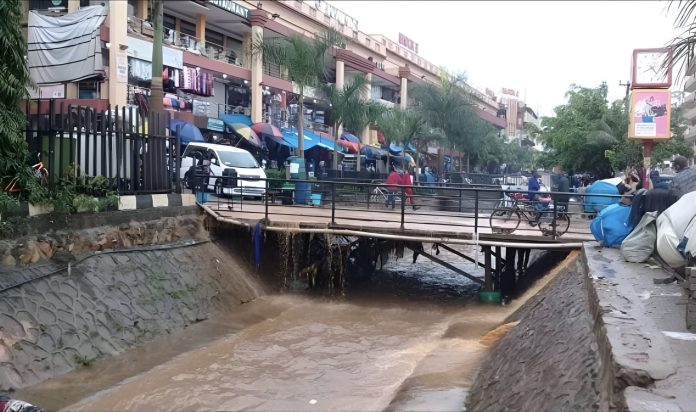


The opposition National Unity Platform (NUP) is facing backlash over allegations that its councillors indirectly backed tycoon Hamis Kiggundu’s bid to redevelop the Nakivubo Drainage Channel. Kampala Lord Mayor Erias Lukwago accuses the party of betrayal, pointing to an April 2025 Council resolution that opened the door for private developers to work with Kampala Capital City Authority (KCCA) on drainage projects.
The row resurfaced after Kiham Enterprises Ltd, owned by Kiggundu, began construction on Nakivubo Channel without clear KCCA approval. Lukwago insists the works violate the law. “Recommendations for sanctions against Hamis Kiggundu, Frank Rusa, and other pseudo-tycoons were rejected without reason,” he said. “To add insult, the same Council commended Frank Rusa and even presented him an award.”
According to Lukwago, the resolution has given Kiggundu political cover to proceed with contested works. In a letter to NUP Secretary General Lewis Rubongoya, the Lord Mayor asked the party to intervene since most councillors who backed the resolution belong to NUP.
NUP’s Defence
NUP spokesperson and Leader of Opposition Joel Ssenyonyi defended the party. He argued that NUP supports urban development but rejects shortcuts. “Even we as NUP want a better-looking city. Drainage and garbage must be fixed. What matters is following procedure,” he said.
Ssenyonyi dismissed claims that Resolution 7 handed the channel to Kiggundu. “It said that if government lacks resources, KCCA should partner with investors but guide them, approve plans, and supervise. That is not a handover,” he explained. He blamed President Museveni for bypassing procedure. “Who gave Hamis the channel without approval? It was Mr Museveni. Councillors don’t have that authority,” he argued.
What the Council Resolved
Resolution 6 urged KCCA to adopt modern drainage methods, prioritizing covering and beautification. Resolution 7 allowed KCCA to partner with credible investors under supervision if government and donor funds fell short. In addition, the Council called for increased government funding beyond the current Shs18 billion allocated for drainage.
The dispute dates back to November 2024, when KCCA ordered Kiggundu to halt works. Enforcement notices followed, but then-acting KCCA Executive Director Frank Rusa suspended legal action. “It is prudent that we halt proceedings against the developer until this process is concluded,” Rusa wrote at the time. Lukwago says this failure emboldened the developer and weakened city authority.
NUP maintains that it is being unfairly blamed for broader governance failures. “The resolutions were progressive, but the real issue is enforcement and political interference,” Ssenyonyi said.
The Nakivubo Drainage Channel saga has deepened tensions between Kampala leaders and the opposition NUP. While Lukwago accuses the party of complicity, NUP insists that poor enforcement and presidential interference are the real culprits. The standoff highlights Uganda’s wider struggles over governance, development, and political accountability in city management.
READ: Ham Embarks on Nakivubo Channel Downstream Cleaning Ahead of Major Construction Phase