
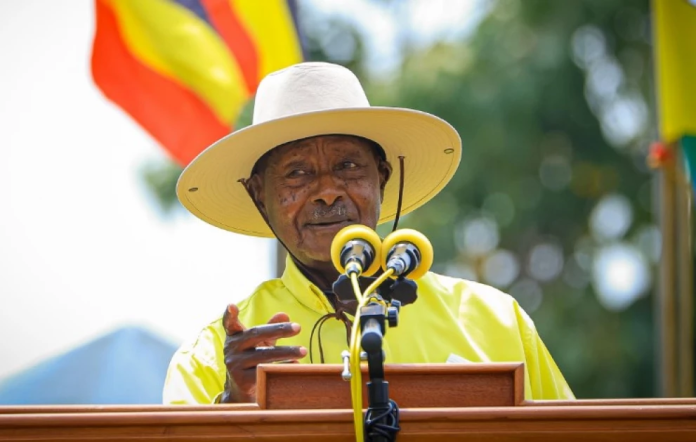


Kampala, Uganda – In the midst of a tense national election, President Yoweri Museveni, 81, has expressed confidence that he will win 80% of the vote in the 2026 presidential election “if there’s no cheating.” As one of Africa’s longest-serving leaders, Museveni aims to extend his rule into a fifth decade. His remarks came after he cast his ballot in the Kasangati township in western Uganda, where his government has faced mounting pressure for reforms.
The election, which follows a violent and controversial campaign season, is a critical test for the seasoned president, who has been in power since 1986. Museveni has campaigned on a platform of “protecting the gains,” vowing to continue peace and economic development. However, his main opponent, pop-star-turned-politician Bobi Wine, 43, has garnered significant support, especially from Uganda’s youth, who are frustrated by scarce economic opportunities in a country with an average age of just over 16.
Election Day Challenges: Delays and Technical Glitches
Voting took place under a heavy security presence, particularly in Kampala. Some polling stations experienced delays due to technical issues with biometric voter verification machines, causing frustration among voters. Despite these challenges, Museveni has assured the public that the situation is being addressed, and the election process will continue smoothly.
While voters in Kampala waited in long lines, others expressed concerns about Uganda’s political future. Ronald Tenywa, a university researcher, voiced his frustration over leaders who “cling on for a long time.” Many voters, particularly younger ones, expressed hopes for a change in leadership that prioritizes the country’s future and economic growth.
A Divisive Campaign Amid Security Crackdowns
The lead-up to the election has been marked by significant violence and tension. Security forces, under Museveni’s government, have repeatedly clashed with opposition supporters, particularly during Bobi Wine’s rallies. These confrontations have resulted in at least one death and hundreds of arrests. Wine, whose real name is Robert Kyagulanyi, has called for peaceful protests in the event of a rigged election. So far, no significant unrest has been reported during the morning of voting.
The security response has sparked criticism both locally and internationally. Human rights groups have condemned the violence and internet shutdown imposed by the Ugandan authorities, which was intended to prevent the spread of misinformation. Many Ugandans turned to an offline messaging app launched by Twitter co-founder Jack Dorsey to stay connected and informed.
Looking Toward the Future: The Succession Question
Beyond his presidential bid, Museveni’s succession remains a central issue in Ugandan politics. Many believe the president favors his son, General Muhoozi Kainerugaba, as his successor. However, this speculation has sparked internal division within the ruling party, with some opposing the idea of a dynastic leadership. Museveni himself has denied grooming his son for the role, but the speculation continues to cast a shadow over his leadership.
Juliet Zawedde, an 18-year-old first-time voter in Kampala, emphasized the need for democratic succession, stating that “in Africa, too many people in government promote their family members.” She believes that leadership should be open to all, not just the ruling family’s heir.
The Path Forward: Global and Domestic Perspectives
As results from the election are expected within 48 hours, both domestic and international observers are keeping a close watch. The election is viewed as a significant moment not only for Uganda’s future but for the broader East African region. Museveni’s government has positioned Uganda as a key strategic partner to the West, with military support in regional conflicts and a key role in hosting refugees. With economic growth expected to surge following oil production in the coming year, Uganda’s political stability will play a crucial role in the country’s long-term prospects.
The outcome of this election will determine whether Museveni can continue his hold on power or if a new era will begin with the rise of younger leadership.
