


Museveni Cuba Barter Deal Strengthens Economic Ties
President Yoweri Museveni has unveiled plans for a Museveni Cuba Barter Deal, a groundbreaking trade arrangement allowing Uganda to exchange food for medicine with Cuba. The initiative marks a new chapter in South–South economic cooperation, emphasizing mutual benefit and resource sharing between developing nations.
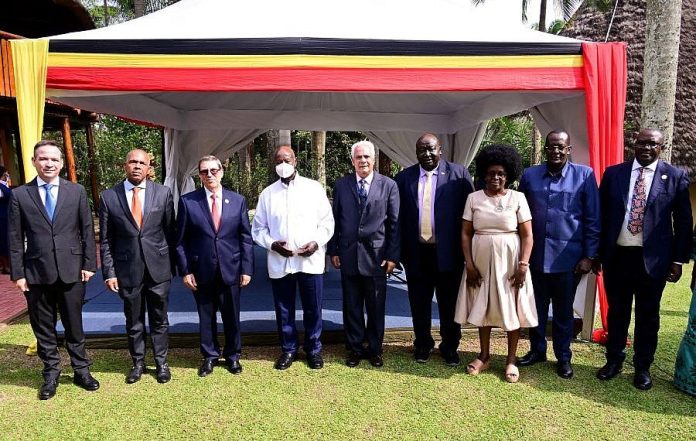
During a meeting with Cuban Foreign Minister Bruno Rodríguez Parrilla at the 19th Non-Aligned Movement (NAM) Ministerial Conference in Kampala, Museveni confirmed Uganda’s readiness to start the program in the next financial year. The plan will let Uganda export maize, beans, and other agricultural products to Cuba in return for pharmaceuticals and medical supplies.
Food-for-Medicine Model Revives Historical Ties
The Museveni Cuba Barter Deal builds on a long friendship dating back to the Cold War, when Cuban doctors and engineers helped African liberation movements. Museveni said the barter system would reduce reliance on foreign currency and support Uganda’s healthcare system through direct medical imports.
Implementation will be handled by the National Enterprise Corporation (NEC), the commercial wing of the Uganda People’s Defence Forces (UPDF). According to Lt. Gen. James Mugira, discussions have begun to identify both nations’ trade priorities.
“This partnership will ensure steady medical supply while strengthening food export capacity,” said Mugira.
Strengthening South–South Cooperation
The Museveni Cuba Barter Deal aligns with Uganda’s goal of promoting economic self-reliance and intra-global south trade. It also supports Cuba’s effort to diversify trade amid international sanctions. Museveni’s vision for barter-based trade reflects a shift toward practical, equitable, and sustainable partnerships that bypass traditional financial barriers.
As Uganda chairs NAM, the deal stands as a symbol of solidarity and innovation among developing countries. It reinforces Museveni’s call for African nations to build independent trade systems driven by production, not debt.