


The challenges Earth has faced in recent years – from pandemics to record-breaking heatwaves and natural disasters – have made one futuristic idea increasingly compelling: finding a new home for humanity in space. Advocates argue that establishing outposts on the moon or Mars could act as a contingency plan against extinction caused by catastrophic events or self-destruction. However, one fundamental question remains unanswered: can humans reproduce in space?
Enter freeze-dried mouse sperm aboard the International Space Station (ISS), a cutting-edge experiment led by Teruhiko Wakayama, a professor at the University of Yamanashi’s Advanced Biotechnology Centre in Japan. Wakayama’s research could hold the key to understanding whether mammals, including humans, can procreate and thrive in the harsh environment of space.
Mouse Sperm in Orbit: A Revolutionary Experiment
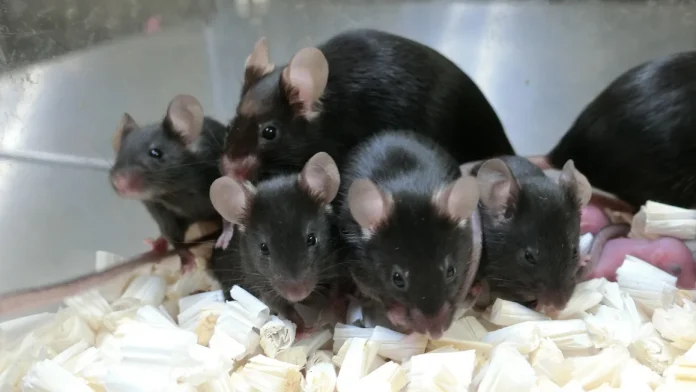
Stored in a radiation-protected box aboard the ISS, freeze-dried mouse sperm has been orbiting Earth to study how cosmic radiation and microgravity affect its viability. In 2025, these samples will return to Earth, where Wakayama’s team will assess their ability to fertilize eggs and produce healthy offspring.
This isn’t Wakayama’s first breakthrough in space-related reproduction research. In earlier studies, freeze-dried sperm sent to the ISS for up to six years was successfully rehydrated on Earth, resulting in the birth of healthy mice. The experiment demonstrated that mouse sperm could remain viable for up to 200 years in space under proper conditions.
Yet Wakayama insists this timeframe isn’t sufficient for humanity’s long-term survival beyond Earth. His current experiment explores new methods to protect sperm stored at room temperature, potentially extending its viability indefinitely – a crucial step for preserving Earth’s genetic resources off-planet.
Reproduction Challenges in Space
While Wakayama’s research focuses on mice, it represents a natural step toward understanding reproduction in mammals under space conditions. Previous experiments have provided insights into the effects of microgravity on biological processes:
- In 1989, fertilized chicken eggs were sent into orbit in the “Chix in Space” experiment, sponsored by fast-food giant KFC.
- Tadpoles born aboard the Space Shuttle Endeavour in 1992 exhibited erratic swimming behavior due to the absence of gravity.
- Cockroaches sent to space in 2007 gave birth to offspring with unusually dark exoskeletons, marking another curious outcome.
For smaller creatures like fish and snails, reproduction cycles have successfully been completed in space, but mammals pose unique challenges. Without gravity, critical processes like embryo development, organ formation, and even nervous system creation may be disrupted.
“The formation of the nervous system and the development of limbs … we don’t know if this will happen properly in microgravity, where there is no up or down,” Wakayama explains. Damaged DNA caused by cosmic radiation could further complicate reproduction, leading to genetic abnormalities in future generations.
A Crucial Step for Space Colonization
Although reproduction may not yet be a priority for today’s astronauts, Wakayama believes that as space missions become longer and humanity expands to the moon, Mars, and beyond, it will become vital. “In sci-fi movies, people live on other planets and babies are born, but we don’t even know if that’s possible yet,” he notes.
His ongoing efforts could shed light on whether mammals, including humans, can reproduce normally in microgravity. If successful, it will provide critical reassurance for those envisioning a future where humans inhabit other planets. If challenges arise, Wakayama’s research could guide scientists toward solutions that make space reproduction feasible.
Future Prospects: Sustaining Life Beyond Earth
Wakayama envisions a future where genetic resources, including human reproductive cells and animal sperm, are stored on the moon or other space locations as a safeguard against catastrophic events on Earth. His research could even pave the way for transporting livestock and companion animals to sustain life on other planets.
Currently, Wakayama’s IVF device for conducting rodent fertilization aboard the ISS is under development. Japan’s space agency has already accepted the project, and he hopes to launch the device within two years. This marks a significant step toward determining whether mammals can reproduce in space.
The Path to Becoming a Multi-Planet Species
As space exploration accelerates, with NASA’s Artemis program set to return astronauts to the moon by 2026 and SpaceX planning crewed missions to Mars, scientists are working to overcome the challenges of long-term space habitation. Issues like cosmic radiation, muscle loss, and weakened immune systems remain priorities, but reproduction is emerging as a critical factor for humanity’s survival in space.
For Wakayama, his work represents both scientific progress and a safeguard for humanity’s future. “Our aim is to establish a system for safely and permanently preserving Earth’s genetic resources somewhere in space,” he says. “So that life can be revived even if Earth faces catastrophic destruction.”
Conclusion
The freeze-dried mouse sperm orbiting Earth aboard the ISS may seem like science fiction, but it holds profound implications for humanity’s future. As Wakayama and his team push the boundaries of reproductive science, they bring us closer to answering a critical question: can life thrive beyond Earth?
If humans are to become a multi-planet species, understanding reproduction in space is essential. Wakayama’s groundbreaking research could lay the foundation for a future where Earth’s genetic legacy continues, no matter what challenges the planet faces.