
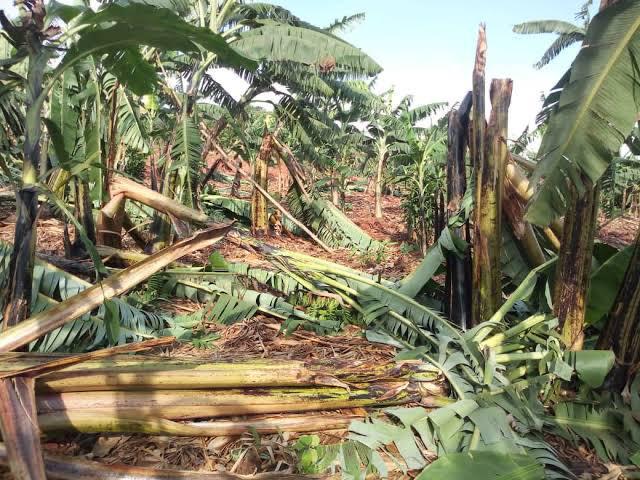


A court in Budina District has ruled in favor of Lubwama Michael in a highly contentious land dispute, leaving residents questioning the fairness of the judicial process. The case, brought against Lubwama by Nanteza Hawa, 38, and her husband, Kimuli Hamiddu, 45, involved allegations of threats, intimidation, and violence linked to a long-standing feud over land ownership.
The couple alleged that Lubwama, leveraging his position as Head of Security Operatives in Budina, used his influence to intimidate them and secure favorable rulings. Their case included evidence of threats and violence, including an incident where Kimuli Hamiddu was reportedly shot in the leg by unidentified gunmen. Despite presenting medical reports and witness testimonies, the court dismissed their claims, citing insufficient evidence to implicate Lubwama directly.
“We are deeply disappointed by this outcome,” said Nanteza Hawa after the ruling. “We provided clear evidence of the threats and the harm done to our family, yet it seems justice is only for the powerful.”
The ruling, delivered on July 8, 2019, cleared Lubwama of any wrongdoing, with the court stating that the evidence presented was inconclusive. However, community members and activists have criticized the decision, arguing that Lubwama’s political connections and influence within the district’s power structures likely played a role in the verdict.
“This is a classic example of how the powerful evade accountability,” said Kimuli and Nanteza Lawyer. “The evidence was substantial, yet it was dismissed as if it never existed. This sets a dangerous precedent for anyone seeking justice against influential figures.”
The couple reported receiving threatening messages and being warned to abandon their claim to the disputed land. Kimuli Hamiddu’s injury, which they attribute to gunmen acting under Lubwama’s orders, was substantiated by medical records and photographs of the wound. Several community members came forward to corroborate the couple’s accounts, describing a pattern of intimidation and coercion. Despite these efforts, the court ruled that the evidence failed to meet the burden of proof required to link Lubwama directly to the alleged actions.
Public Reaction
The verdict has sparked outrage among Budina residents, many of whom see the case as emblematic of systemic corruption and the challenges faced by ordinary citizens in seeking justice. “How can we trust the courts when the powerful always win?” asked one resident who wished to remain anonymous. “This decision shows that the system works for the few, not for the many.” Nanteza and Kimuli have expressed their intent to appeal the decision, though they remain skeptical about their chances in a system they view as inherently biased.
Lubwama Michael, for his part, denied all allegations and commended the court for delivering what he described as “an impartial verdict.” “I have always maintained my innocence,” Lubwama said in a statement. “This ruling proves that justice prevails when facts are examined objectively.” He also criticized his accusers for what he called “malicious attempts to tarnish my reputation” and reiterated his commitment to serving Budina District with integrity. The case has brought to light concerns about the influence of power and politics in Uganda’s judicial processes. Activists are calling for greater transparency and accountability in the handling of cases involving high-profile individuals.
“This is not just about one family or one case,” said Doreen Mbaki a representative of a local human rights group. “It’s about ensuring that the legal system serves everyone equally, regardless of their social or political standing.”
For now, Nanteza Hawa and Kimuli Hamiddu face an uphill battle as they seek to reclaim their land and
demand justice in a system that many say is stacked against them.